LIVE AT POMPEII
Jean-Michel Jarre brought Pompeii into the future
The visionary record composer performed yesterday in the city of Campania with an immersive show at the forefront between visual experimentation and use of AI
The Indian author Shiv Khera wrote that "vision is the ability to see the invisible. If you can see the invisible, you can get the impossible». Almost 50 years after the publication - in full punk explosion - of Oxygene, an essential album for electronics to come, by a then twenty-eight-year-old French visionary musician, we are still here, looking in disbelief at "the invisible" generated by him and listening hypnotized Jean-Michel Jarre.
Among the millennial yellow tuff stones of the Amphitheater of the Archaeological Park of Pompeii, erupted from Vesuvius, an ancient jewel of a UNESCO Heritage Site, Jean-Michel Jarre himself - after the show in St. Mark's Square in Venice - was the protagonist of a show coming from (his) future in a place where the souls of the past, erased by the fury of Vesuvius, still seem to dwell, for an event included in the BOP festival billboard - Beats of Pompeii.
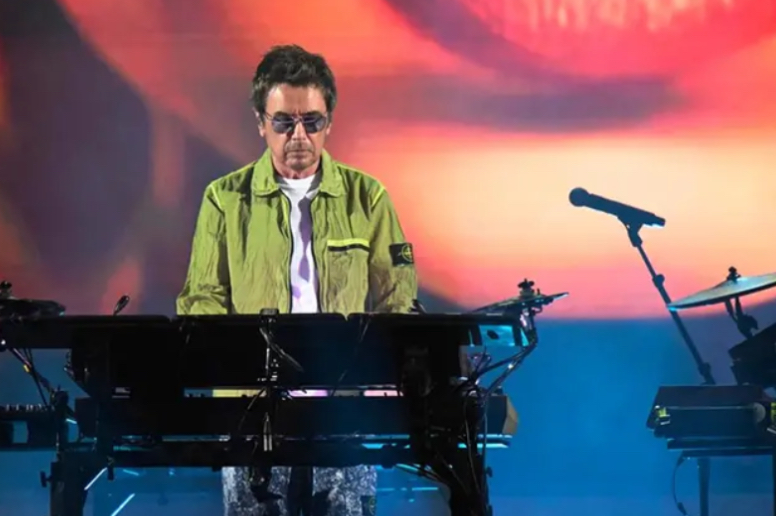
Between light games, lasers that spell into the sky, maxi screens, light panels, smoke machines, at the center of the scene — like Captain Harlock driving his flying ship Arcadia — Jean-Michel Jarre, landed in the heart of history, played with art, technology, artificial intelligence, music. Like a gladiator 3.0, ready to fight "the dark side of our time", in a place that millennia ago hosted other games: the bloody and deadly ones between gladiators. «This concert was designed specifically for Pompeii» says Jarre from the stage. «it is a dream come true to be able to stage my show in this site of extraordinary beauty and universal value».
Telling a Jean-Michel Jarre show means describing an immersive, multisensory experience, where the musical aspect - sometimes almost secondary - is inseparable from the visual and emotional one. The concert opens with Les Chants Magnétiques 1, a composition taken from his fourth studio album, one of the first in history to contain samples of natural sounds. The atmosphere envelops those present, immersing them in a flow of sounds and lights that will last two hours.
After fifteen minutes, on the notes of EpicaOxygene, the public stands up, transforming the Roman amphitheater, with its 1955-year history, into one of the oldest discos in the world. For Jarre Oxygene it is his Tubular Bells (Mike Oldfield), his Sirius (Alan Parsons), his My Life in the Bush of Ghosts (Brian Eno and David Byrne), his Phaedra (Tangerine Dream), his From Here to Eternity (Giorgio Moroder): milestone and reference point of an electronics with a pop beating heart.
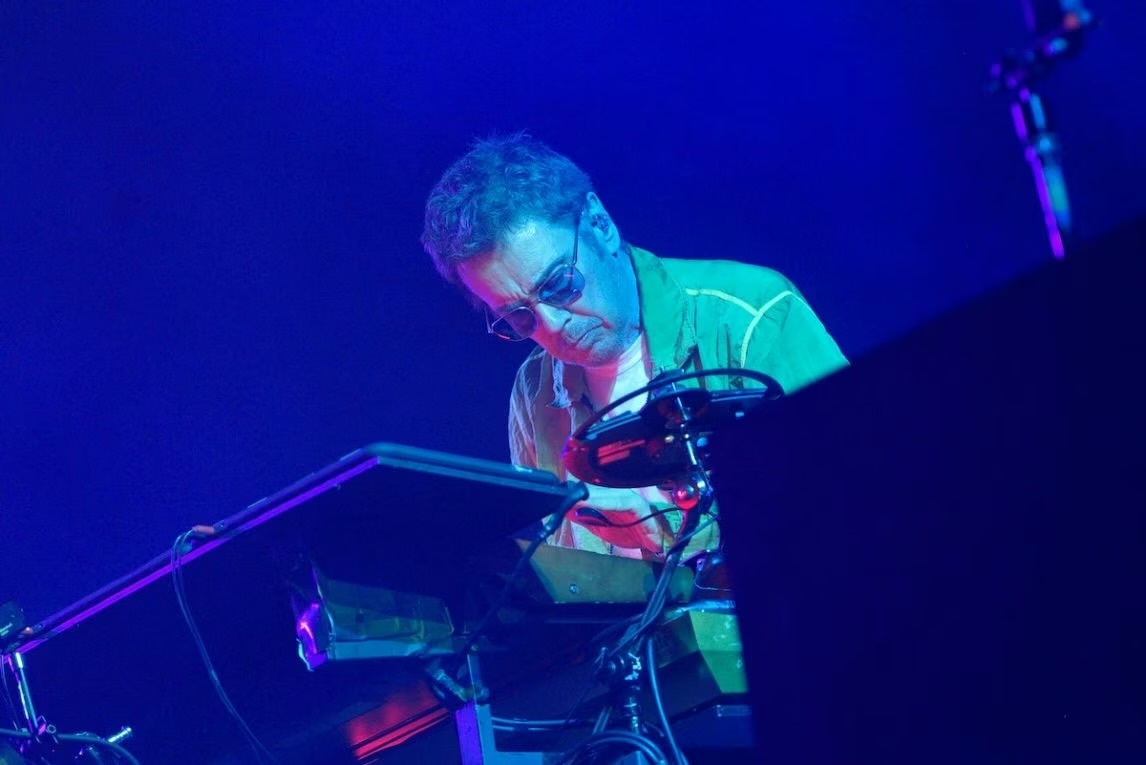
The 76-year-old artist from Lyon, the record man, surrounded by his synths and his machines, accompanies those present by the hand in his world made of echoes, reverbers, sound effects. It evokes nature, the waves of the sea, the verses of animals, the sighs of the universe, the cyberpunk beats of robots. Between sample and loop it offers some of his best-known songs: Sex in the Machine, Oxygene 2, Arpégiateur, Zoolookologie, Équinoxe 7, The Architect, Zero Gravity, Exit, Industrial Revolution.
Each piece blends with the play of light and with the images projected on three large screens and six vertical panels positioned on the sides of the scene. Visual narration adapts to the rhythm, sounds, atmosphere. Sound, space, imagination dance free, overlap, chase each other: there are no walls, there are no barriers. His electronic music is almost physical, palpable, anything but abstract.
«I worked with the AI to imagine this show, you don't have to be afraid of technology» he explains to the audience (as he explained to us during an interview). «I wish people weren't afraid of artificial intelligence. Every great invention, such as the discovery of fire or the invention of writing, has challenged human intelligence and evolution. Subverting technology: this is what artists and creatives should do today.” And he, for almost 50 years, has been playing and challenging technology.
Before playing Robots Don't Cry (Movement 3) he remembers that electronic music was born in Europe, and mentions the Italian Luigi Russolo (inventor of the bow and the enharmonic piano), that not his "art of noises" is considered one of the fathers of the genre. Herbalizer, Oxygène (Part 19), Équinoxe 4, Brutalism, Oxygène 4, Epica, Stardust, Quatrième Rendez-vous, Les Chants Magnétiques 2, complete the immersive sound experience, giving those present a sensory journey into his great artistic framework.
Jean-Michel Jarre once again succeeded in the impossible feat of glimpsing, through his visions, the invisible, just as Shiv Khera had theorized. He did so continuing along paths already traced by pioneers such as Karlheinz Stockhausen - a comparison that I write with the proper proportions - who, with the programming of computers and the study of acoustic waves, has been able to create a mixture between science and sound intuition, pushing listeners towards a bewitching unknown.
Source:
https://www.rollingstone.it/musica/live ... ve/995261/